
Arrest Warrants in Colfax County
New Mexico Form 9-210, titled Warrant for Arrest, is the backbone of a Colfax County arrest warrant. The blank calls for the court, county or city, case number, and defendant. It adds the charge. The probable-cause description comes with its statute or ordinance, the execution jurisdiction, and the law-enforcement system destination. A judge signs and dates it. The return records arrest, service, or removal. Where a complaint lacks a sufficient written showing, Form 9-209 supplies the sworn probable-cause affidavit. Colfax County splits the issuing work among courts. The Eighth Judicial District Court takes district criminal matters, Raton and Springer Magistrate Courts handle state misdemeanors, DWI, traffic, and preliminary felonies, and a municipal court may issue a city-level process within its limited jurisdiction. The issuing court controls the record.
What a Colfax Arrest Warrant Contains
The blank form is a schema. It is not a live record for a private person. In Colfax County, it shows the legal and operational fields worth asking the clerk about, while sensitive descriptors stay unpublished.
| Court and case | Identifies the court, county or city, and case number. |
|---|---|
| Charge | Describes the offense and may cite a statute or ordinance. |
| Probable cause | May appear in the complaint or a linked Form 9-209 affidavit. |
| Judge and date | Shows who issued the process and when. |
| Execution jurisdiction | States the geographic scope supplied by the form or case. |
| Return | Records arrest, service, booking, removal, or another outcome. |
No filled-in Colfax County arrest warrant is published as a sample, so there is no local number format to copy.
How Colfax Arrest Warrants Are Served
The form instructions spell out several execution routes: state, county, municipal, campus, tribal, Pueblo, and other law enforcement. That is operational context only. It does not mean each agency publishes its warrant records. A sheriff's deputy or a police officer may serve the process. The issuing court stays the primary status source either way. Ask the clerk whether the warrant is still issued, has been served, was returned, or was removed. Ask the sheriff only about routing, booking, or surrender. The official Colfax Sheriff page posts no public arrest-warrant roster.
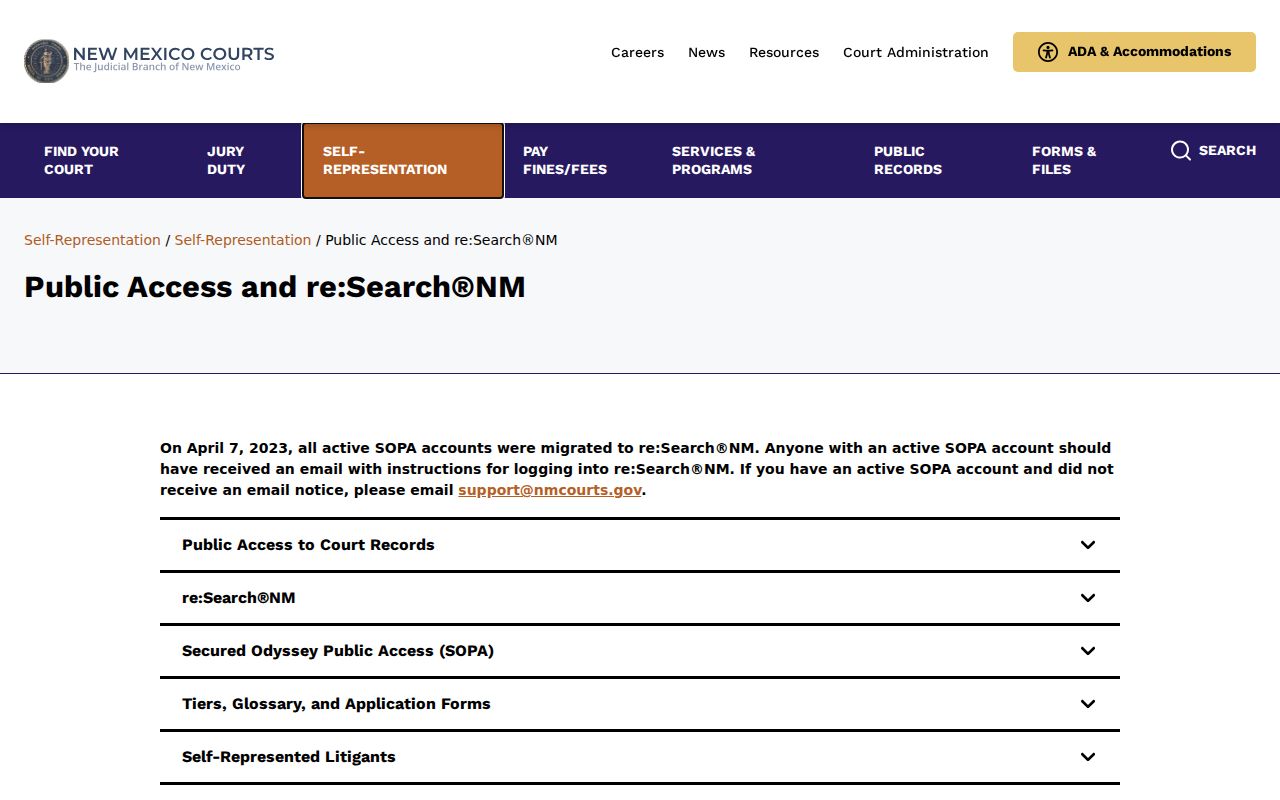
The Case Lookup source supports a court-first search, not a live county roster.
Arrest, Summons, and Bench Warrant
These Colfax County records are not interchangeable. A summons asks you to appear; an arrest warrant authorizes an arrest on probable cause; a bench warrant grows out of an existing case or court obligation. The court name and the trigger tell them apart.
| Process | Record basis | First status source |
|---|---|---|
| Summons | Notice to appear in court. | Issuing court and case docket. |
| Arrest warrant | Probable-cause charge process. | District, magistrate, or municipal clerk. |
| Bench warrant | FTA, release, payment, contempt, probation, or other obligation. | Court that set the obligation. |
Complaint and Affidavit Records
Form 9-209 is the sworn arrest-warrant affidavit. It backs complaints short on written probable cause. Form 9-215 is different. That one is a probable-cause statement used when an arrest is made without a warrant. Which forms actually sit in a Colfax County file is the court's to confirm, not something to read off a public case screen. Name your items when you request the file. List the complaint, the probable-cause affidavit, the warrant, the docket entry, the service return, and the cancellation or removal record as separate documents, since a narrow request beats asking a clerk to build a countywide report.
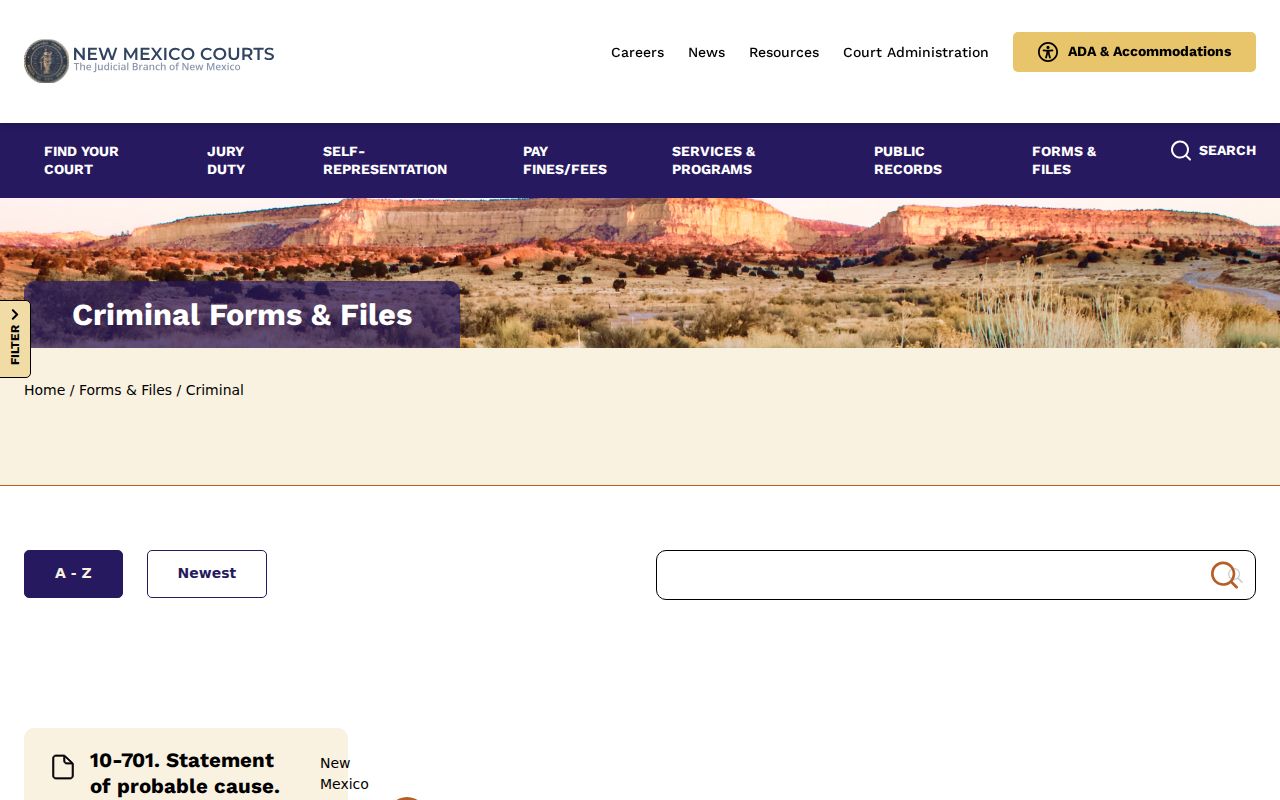
The state criminal-form index shows why a Colfax County warrant packet may hold more than one document.
Charge Is Not a Conviction
A Colfax County arrest warrant records probable cause and the authority to arrest. It settles nothing else. Keep the court file, the docket, and the final case outcome separate when you read a record listing.
Record boundary: A public warrant record should be read with the case docket and current court confirmation, not as a final judgment.
Rule 1-079 NMRA also limits public access. Protected identifiers, sealed records, juvenile matters, and other restricted files stay closed in Colfax County courts. Do not republish protected details. That means no full birth dates, Social Security numbers, driver-license numbers, private addresses, or photos.
Execution Range on the Form
Form 9-210 carries an executable-jurisdiction field. That field is not decoration. It marks where law enforcement may execute the process and where the return should be made, though the exact range belongs to the warrant and the court's order. A blank form promises nothing about where any person stands today. The Colfax County sheriff's office can explain operational routing. The clerk controls the court file. That clerk sits in the Eighth District, Raton or Springer Magistrate, or a municipal court. A state DPS or AOC transmission is not a public NMCIC, NCIC, or CJIS search page.
What to Do If You Think One Exists
Search Case Lookup by name or case number. Identify the court. Then call the clerk and ask whether the warrant is current, whether an appearance or bond is required, and whether the court expects a lawyer, payment, surrender, or another step. Colfax County posts no set surrender hours, booking instructions, or bond counter schedule, so confirm timing when you call.
Important: Obtain court or legal advice about the safest lawful process before appearing, surrendering, or relying on an online status label.
Keep the clerk's confirmation handy. Ask which document proves cancellation or removal, and see the Colfax County next steps for the same payment, bond, return, and system-update distinctions.
Requesting the Arrest-Warrant File
The New Mexico Courts IPRA form is the public route to an identifiable court record. Give the court location, department, case number, and date. Then name the pieces you want. A request can seek the warrant, the 9-209 affidavit, the complaint, the docket entry, the service return, the bond order, the cancellation order, or the removal notation. NMSA 14-2-8(D) guidance asks for requester contact information and reasonable particularity. No reason is required. Court IPRA does not automatically reach sheriff records, MVD records, or other agency files in Colfax County. Ask the office that holds the record.
Federal Arrest Warrants Differ
Federal cases live outside the county loop. A federal warrant or failure-to-appear charge will not surface in New Mexico state Case Lookup or on the Colfax Sheriff page. Colfax County residents facing one should go through the U.S. District Court for the District of New Mexico instead. PACER and McVCIS both offer electronic access, and the U.S. Marshals District of New Mexico handles federal fugitives. Some federal records stay sealed or restricted from public view. For a Colfax County state or municipal arrest warrant, though, the county court chain is still the right route, so keep those systems straight.